

Surprising statistic: a majority of on-chain losses are not from mysterious zero-day exploits but from predictable mistakes in how wallets and dApps exchange intent. That observation forces a practical reorientation: the battle for safer DeFi is at the junction where user intent becomes a signed transaction. This article explains the mechanisms of dApp integration, how DeFi protocols and smart contracts interpret user actions, and where advanced wallets can meaningfully reduce risk without pretending to offer magic.
Readers in the US and beyond typically know the basic flow—dApp UI asks for a signature, the wallet signs and broadcasts—but miss the intermediate translation layer where every mismatch of assumptions becomes a vulnerability. I’ll show you the pieces, compare three integration patterns, point out common failure modes, and give a compact decision framework for choosing a wallet or integration approach when you’re interacting with complex protocols.
Mechanics: What actually happens when you click ‘Approve’
At a mechanistic level there are three actors: the user interface (dApp), the wallet (agent), and the smart contract (executor). The dApp proposes intent—swap X for Y, stake tokens, provide liquidity. The wallet translates that intent into one or more raw EVM transactions: calldata, gas limits, value, and nonce. When a wallet signs and broadcasts a transaction, it commits the user’s private key to that precise calldata. The smart contract then evaluates the calldata according to its own logic and state, producing on-chain state changes.
This chain of translation is where assumptions must line up. Examples: a dApp might assume a specific token decimal behavior; a contract might revert on insufficient gas; front-ends sometimes batch approvals into complex multisend transactions. Any mismatch—decimal, ordering, allowance model—can convert a benign action into a loss. Importantly, many of these failures are deterministic and discoverable if you simulate the transaction in an accurate environment before signing.
Three common integration patterns and their trade-offs
There are roughly three integration patterns between dApps and wallets that you will encounter.
1) Minimal RPC passthrough. The dApp sends JSON-RPC calls; the wallet provides signing. Trade-offs: simplicity and compatibility are strong here. Downsides: virtually no extra safety; the wallet trusts the dApp to present readable intent and lacks context to warn about complex calldata or hidden approvals.
2) Intent-encoded interactions. The dApp signs an explicit high-level intent (e.g., a structured message or EIP-712 typed data) that the wallet translates into transactions. Trade-offs: better user understanding and potential for permission-scoped approvals. Limits: requires standardized intent schemas and active adoption by dApps; it cannot prevent smart contract reentrancy or state-dependent reverts once on-chain.
3) Simulation-first integrations. The wallet simulates the exact transaction(s) using a forked-chain state or node-based dry-run and presents a digestible report: will it revert, what contracts will be touched, slippage ranges, approval checks. Trade-offs: strongest protection against obvious mis-sends and state-dependent failures; requires more compute and accurate node state (fork latency, mempool differences, oracles). Limitations: simulations are probabilistic—time between simulation and final inclusion can change state, and MEV or frontrunning remains a risk.
Each pattern answers different user needs. For a passive user moving small amounts, a minimal wallet may suffice. For a power user interacting with composable DeFi strategies, simulation-first behavior is a meaningful safety delta.
Where integrations break: four realistic failure modes
Understanding failure modes helps you design safer interactions and choose a wallet with features that matter.
1) State-dependence. Contracts often check external state (price oracles, pool balances). A simulated success can fail at broadcast if market conditions move. Simulation-first wallets reduce, but do not eliminate, this risk.
2) Approval creep. Many dApps still request unlimited ERC-20 approvals. Wallets that flag or simulate approval scope help, but only developer-side changes (permit designs, ERC-2612) will fully cure the problem.
3) Mismatched decimals and rounding. UI-level assumptions about token decimals or fee-on-transfer tokens can produce different on-chain outcomes. A wallet that exposes calldata intent and parameter decoding can catch this class early.
4) Composability surprises. Transactions that bundle multiple protocol calls rely on inter-call assumptions. Simulations can show the intended path, but hidden reentrancy or permission checks may still be missed unless the wallet parses and models contract-specific behaviors.
Why transaction simulation and richer UI metadata help
Transaction simulation is not a panacea—but it shifts the probability distribution of bad outcomes. By executing a transaction against a recent state snapshot, a wallet can detect immediate reverts, compute realistic gas estimates, estimate token outputs, and show which contracts will be touched. That’s why advanced wallets surface: exact contract addresses, function names decoded from ABIs or signatures, allowance changes, and estimated slippage ranges.
Three caveats: first, simulation relies on the fidelity of the node or forked state; if the snapshot lags the chain, the result may be misleading. Second, complex contracts can call external contracts dynamically; simulating without full ABI knowledge may underreport side-effects. Third, MEV costs or front-running risk are not visible to a dry-run—the macro environment matters. Still, simulation plus human-readable context creates a substantially higher bar for social-engineering style attacks.
Comparing wallets: what to prioritize for DeFi users
When you evaluate a wallet for heavy DeFi use, trade-offs cluster around three axes: transparency, automation, and performance.
Transparency: Does the wallet decode calldata, display function semantics, and surface which contracts will be affected? A transparent wallet helps you reason about intent and spot unusual approvals.
Automation: Does the wallet support intent templates, transaction bundling with guardrails (for example, default slippage caps), and auto-simulate complex interactions? Automation reduces cognitive load but can obscure edge cases unless controls are granular.
Performance: How fast and accurate are simulations? Wallets that rely on local forks or trusted remote nodes must balance latency, privacy, and correctness. Faster is not always better if it means using stale or incomplete state.
For many US-based DeFi users who interact with multiple chains and protocols, a wallet that favors simulation-first patterns and strong calldata transparency offers the best risk-return trade-off. It reduces both accident and exploit vectors while keeping you in control of signing decisions.
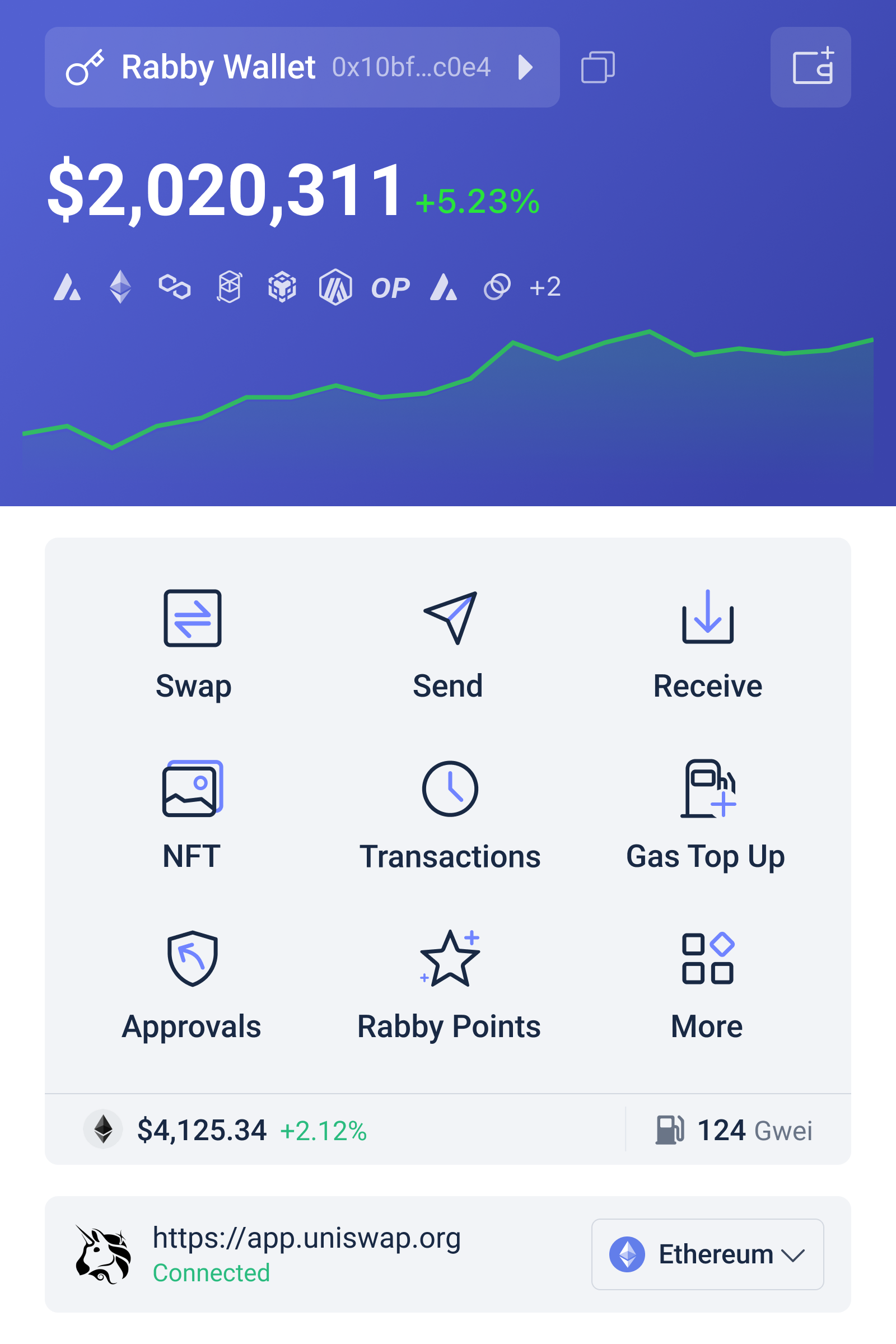
In practice, choose a wallet that: (a) simulates transactions on demand, (b) decodes and labels contract calls, (c) warns on unlimited approvals, and (d) allows you to customize default safety parameters. If you want to try a wallet built around these features and active EVM support across chains, consider exploring rabby wallet to see how simulation and on-chain transparency are implemented in a consumer-facing extension.
Decision heuristic: a quick checklist before signing
Use this simple mental model every time you sign: SIM — State, Intent, Movement.
State: Has the wallet simulated the transaction against a recent chain snapshot? Does it report potential reverts or gas spikes?
Intent: Is the calldata decoded and does the function name match the dApp’s description? Are approvals explicit or unlimited?
Movement: What funds or permissions move, and to which addresses? Is slippage within your acceptable bounds, and who absorbs failed costs?
If any of these answers are unclear, pause and request more information from the dApp or use a wallet that provides richer simulation and decoding before you sign.
FAQ
Q: Can a wallet simulation guarantee my transaction won’t fail on-chain?
A: No. Simulation reduces risk by revealing deterministic reverts and by estimating outputs, but it cannot guarantee success because the chain state can change between simulation and inclusion, and external actors (MEV bots) may alter outcomes. Treat simulation as a strong pre-flight check, not an absolute guarantee.
Q: Why do some wallets still allow unlimited token approvals?
A: Unlimited approvals are a developer convenience inherited from early ERC-20 patterns. They reduce friction and gas for repeated interactions but increase persistent risk if the counterparty contract is compromised. Wallets can flag and restrict unlimited approvals, but the ultimate fix requires dApp and token standard evolution (e.g., permit or limited-scope approvals).
Q: How should I treat gas estimates shown by wallets?
A: Gas estimates are useful guides but not promises. They depend on current network congestion and the complexity of the transaction path. In complex DeFi interactions, add a safety margin and check whether the wallet can resubmit with adjusted gas if the mempool conditions change.
Q: Is it safer to interact with audited contracts only?
A: Audits reduce certain classes of risk but are neither necessary nor sufficient. Audits review code at a point in time and may miss composability issues, configuration mistakes, or downstream oracle problems. Combine audit status with runtime safeguards—simulations, on-chain checks, and limited approvals—to get layered protection.
What to watch next: adoption of standardized intent schemas, broader use of permit-style approvals, and improvements in on-device or privacy-preserving simulation will change the safety landscape. Each innovation shifts risk rather than eliminates it—your job as a user is to prefer tools that make intent explicit, simulate stateful behavior, and empower easy mitigation when things change.
Final practical takeaway: prioritize wallets that make the invisible visible. A wallet that simulates, decodes, and warns doesn’t remove responsibility from you, but it turns many silent hazards into readable choices. That combination—transparency plus simulation—is the clearest, decision-useful improvement available to DeFi users today.
